All Categories
Featured
Homeowner Rights and Home Mortgage Relief Options in 2026
How to Lodge a Problem Against a Bethlehem Pennsylvania D...

Homeowner Rights and Home Mortgage Relief Options in 2026
Table of Contents
Monetary Truths for Families in Cambridge Debt Relief
The financial environment of 2026 has presented an unique set of difficulties for consumers. With rate of interest remaining at levels that make carrying revolving debt pricey, numerous people discover their monthly payments consume an increasing share of their non reusable earnings. When the expense of living in the surrounding area exceeds wage development, the search for a feasible exit from high-interest responsibilities ends up being a priority. 2 primary courses exist for those facing insolvency: financial obligation settlement and Chapter 7 personal bankruptcy. While both objective to deal with financial distress, the systems, legal securities, and long-lasting consequences differ considerably.
Selecting between these options requires a clear understanding of one's financial position and the particular guidelines governing debt relief in the local region. Debt settlement involves negotiating with financial institutions to accept a lump-sum payment that is less than the overall amount owed. In contrast, Chapter 7 insolvency is a legal procedure that liquidates non-exempt assets to pay lenders, after which most unsecured financial obligations are discharged. Each method has particular requirements and varying effect on a person's ability to gain access to credit in the future.
The Mechanics of Debt Settlement in 2026
Financial obligation settlement often interest those who wish to avoid the perceived stigma of insolvency. The process usually starts when a debtor stops paying to their lenders and instead deposits those funds into a dedicated savings account. Once adequate capital has actually accumulated, settlements start. Lenders, seeing that the account is in default, may be more happy to accept a deposit instead of run the risk of getting nothing through a bankruptcy filing. Ongoing interest in Debt Relief shows a growing requirement for options to standard insolvency.
Working out settlements is not without threat. Since the process needs the debtor to stop making routine payments, late charges and interest continue to accrue, typically causing the balance to swell before an offer is reached. Financial institutions are under no legal responsibility to settle, and some might pick to pursue litigation instead. If a lender in Cambridge Debt Relief files a claim and wins a judgment, they might have the ability to garnish incomes or place liens on property. In addition, the Irs generally sees forgiven financial obligation as taxable income. An individual who settles a $20,000 financial obligation for $10,000 may receive a 1099-C type and be required to pay taxes on the $10,000 "gain," which can develop an unanticipated tax bill the list below year.
Legal Reset through Chapter 7 Bankruptcy
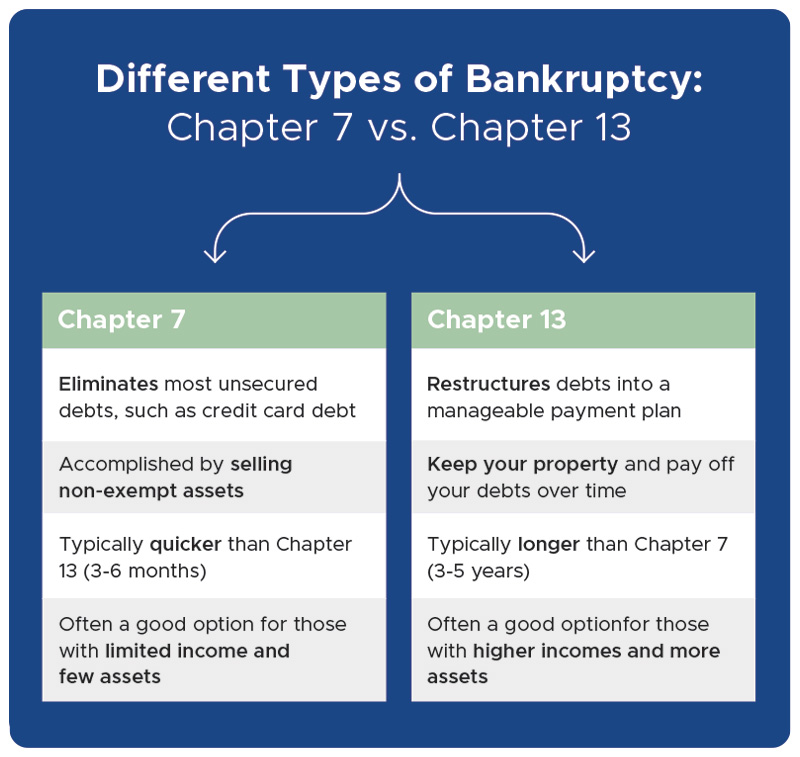
Chapter 7 bankruptcy uses a more official and lawfully secured path. Frequently called liquidation insolvency, it is created to provide a "new beginning" to those with limited income who can not reasonably anticipate to pay back their financial obligations. To certify in 2026, petitioners need to pass a ways test. This test compares their month-to-month earnings to the typical earnings for a household of their size in their specific state. If their earnings is listed below the typical, they normally certify. If it is above, they need to supply detailed information about their costs to show they lack the methods to pay a part of their debt through a Chapter 13 payment strategy.
Among the most instant advantages of filing for bankruptcy is the automatic stay. This legal injunction stops almost all collection actions, consisting of telephone call, letters, suits, and wage garnishments. For lots of living in the United States, this pause supplies instant psychological relief. Nevertheless, the procedure involves a court-appointed trustee who examines the debtor's possessions. While numerous properties are exempt-- implying the debtor can keep them-- non-exempt home can be sold to pay back creditors. Exemption laws differ by place, so the amount of equity one can keep in a home or lorry depends on the statutes in the local jurisdiction.
Comparing Credit Rating Effects
Both financial obligation settlement and Chapter 7 bankruptcy lead to considerable damage to a credit score, however the timelines vary. A Chapter 7 filing remains on a credit report for 10 years from the date of filing. Debt settlement, because it involves marking accounts as "chosen less than the complete balance," likewise hurts ball game, though the private accounts typically fall off seven years after the preliminary delinquency. However, due to the fact that settlement requires the debtor to deliberately fall back on payments, the score often drops before the settlement even takes place.
Recovery is possible in both scenarios. Many individuals find that their credit history starts to enhance within a few years of a Chapter 7 discharge since their debt-to-income ratio has improved so drastically. By 2026, credit report models have actually ended up being more advanced, yet the basic principle remains: lending institutions wish to see a history of on-time payments. DOJ-Approved Debt Relief Services has become a regular subject for those dealing with collection calls. Whether one picks settlement or insolvency, the course to a greater score involves rebuilding with secured credit cards and keeping small, workable balances.
The Function of Nonprofit Credit Therapy
Before an individual can declare bankruptcy in 2026, they are legally needed to finish a pre-bankruptcy therapy session with a U.S. Department of Justice-approved agency. These agencies, such as APFSC.ORG, provide an unbiased look at the debtor's circumstance. A therapist evaluates income, costs, and financial obligations to determine if a less drastic measure might work. One such alternative is a Financial obligation Management Program (DMP) In a DMP, the company works out with financial institutions to lower interest rates and waive costs. The debtor then makes a single regular monthly payment to the company, which disperses the funds to the creditors. Unlike settlement, the full principal is typically repaid, which can be less destructive to a credit report gradually.
Nonprofit agencies also offer monetary literacy education and housing therapy. For house owners in Cambridge Debt Relief who are stressed over foreclosure, HUD-approved real estate therapy is a vital resource. These services help individuals understand their rights and explore options like loan modifications or forbearance. Due to the fact that APFSC.ORG is a 501(c)(3) not-for-profit, the focus stays on education rather than earnings, providing a contrast to for-profit financial obligation settlement companies that might charge high in advance costs.
Navigating the Decision in Cambridge Debt Relief
The option between settlement and bankruptcy typically boils down to the nature of the debt and the debtor's long-lasting objectives. If most of the debt is owed to a couple of financial institutions who have a history of negotiating, settlement may be a faster path. If the debt is spread out throughout lots of different loan providers or if there is an active threat of wage garnishment, the legal securities of Chapter 7 are often more reliable. Consumers frequently search for Debt Relief in Cambridge when managing high-interest balances.
Home ownership is another significant element. In various regions, the homestead exemption figures out how much home equity is protected in insolvency. If a resident has significant equity that goes beyond the exemption limit, a Chapter 7 filing could result in the loss of their home. In such cases, debt settlement or a Chapter 13 reorganization may be the only ways to resolve financial obligation while keeping the residential or commercial property. Professional guidance remains a priority for people searching for relief throughout financial challenge.
Future Outlook for Debt Relief
As 2026 advances, the legal environment surrounding financial obligation relief continues to evolve. New guidelines on for-profit settlement firms have actually increased transparency, yet the core dangers remain. Personal bankruptcy courts in the regional district have moved towards more digital procedures, making filings more efficient but no less serious. The 180-day pre-discharge debtor education requirement remains a cornerstone of the process, guaranteeing that those who receive a discharge are better equipped to handle their finances in the future.
Financial distress is seldom the result of a single option. It is frequently a combination of medical emergencies, job loss, or the relentless pressure of inflation. By analyzing the differences between settlement and bankruptcy, citizens in Cambridge Debt Relief can decide based on data instead of worry. Seeking a complimentary credit therapy session through a DOJ-approved not-for-profit is often the most efficient first step, as it provides a clear view of all offered alternatives without the pressure of a sales pitch.

Latest Posts

Comparing State Exemptions for Primary Houses in 2026
:max_bytes(150000):strip_icc()/Term-b-bankruptcy-50ca3cfd9f4146e78eabe03b64704456.jpg)
New Statutes for Preventing Foreclosure in Your Area
Homeowner Rights and Home Mortgage Relief Options in 2026